

Building emotional resilience is the process of developing the mental flexibility to adapt to stressful situations and recover from life’s inevitable setbacks. It is not about avoiding stress, but rather about having the internal tools to navigate it without being overwhelmed. Resilience involves a combination of healthy coping strategies, social support, and the ability to reframe negative experiences into opportunities for growth.
In this article
- What is emotional resilience and why do I need it?
- What are the common signs of low emotional resilience?
- What are the 4 main pillars of resilience?
- How can I start building emotional resilience today?
- How does the brain change when we build resilience?
- Why is social support critical for emotional strength?
- When should I seek professional help?
- Final Verdict: Your Path to a More Resilient Life
- Frequently asked questions
What is emotional resilience and why do I need it?
Emotional resilience is the psychological “buffer” that helps you stay standing when life gets difficult. I like to think of it as a muscle that strengthens every time you navigate a challenge successfully.
Without this strength, setbacks can feel like permanent failures. You might find yourself trapped in cycles of anxiety or feeling completely drained by small daily stressors.
When you focus on building emotional resilience, you aren’t becoming “numb” to pain. Instead, you are learning how to process that pain effectively so it doesn’t define your entire life.
What are the common signs of low emotional resilience?
It is helpful to recognize when your internal reserves are running low. Many of us mistake low resilience for a personality flaw, but it is actually just a sign that you need better tools.
If you identify with the following experiences, you might benefit from intentional work on your emotional strength:
- Frequent Overwhelm: Feeling like small tasks are massive mountains you cannot climb.
- Difficulty Letting Go: Ruminating on mistakes or “what if” scenarios for days or weeks.
- Social Withdrawal: Cutting yourself off from friends and family because you lack the energy to interact.
- Physical Fatigue: Noticing that emotional stress is manifesting as headaches, stomach issues, or chronic tiredness.
Recognizing these signs is the first step toward change. You can explore how professional therapy sessions can help you avoid burnout by strengthening these specific areas of your life.
What are the 4 main pillars of resilience?
People often ask: Does resilience mean you stop feeling things as strongly?
No, and this is one of the most common misconceptions. Resilient people are not numbed or detached. They tend to feel things fully, but they recover more quickly and are less destabilized by difficult emotions. The difference is not in the intensity of feeling, it is in the relationship to that feeling and the ability to move through it without getting stuck.
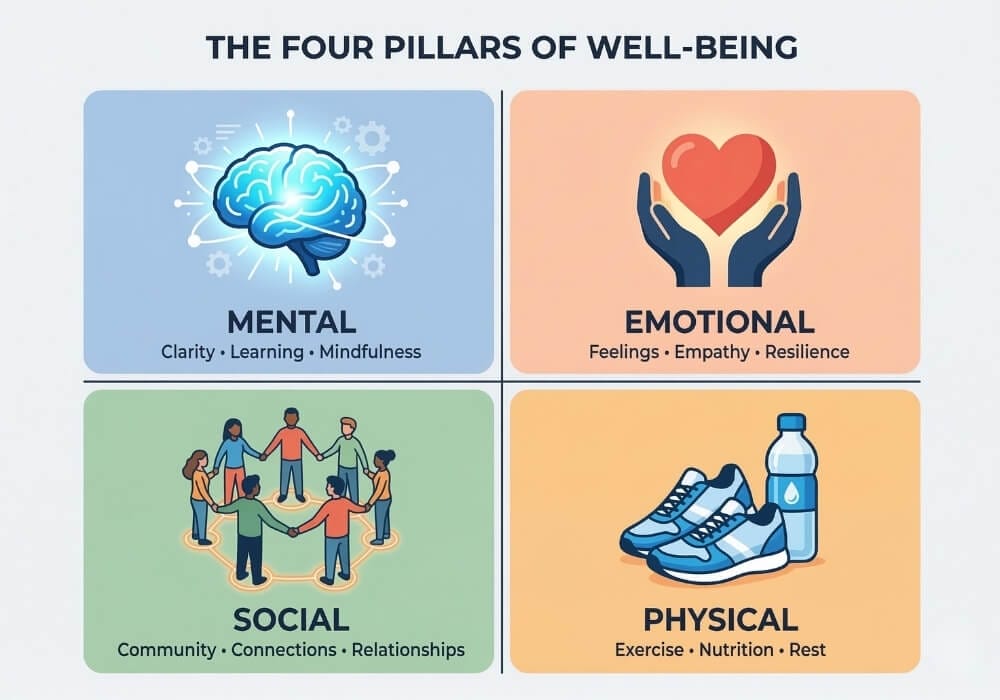
Psychologists often categorize resilience into four distinct areas. Understanding these can help you identify where you are already strong and where you might need a bit more support.
| Pillar | Description | Example in Action |
|---|---|---|
| Mental | The ability to stay focused and think clearly under pressure. | Reframing a job loss as a chance to find a better career path. |
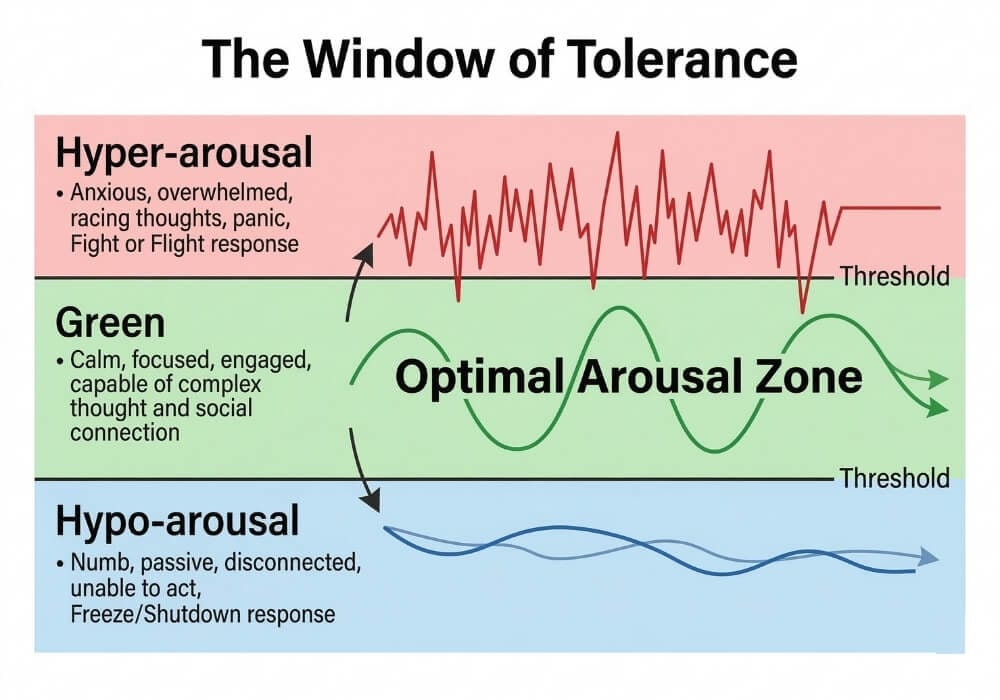
| Emotional | Managing your feelings and staying within your “Window of Tolerance.” | Using breathing techniques to calm down after a heated argument. |
| Social | Connecting with others for support and perspective. | Calling a trusted friend to vent instead of bottling things up. |
| Physical | The health of your body and nervous system. | Prioritizing sleep and nutrition to keep your brain functioning at its best. |
 How can I start building emotional resilience today?
The beauty of building emotional resilience is that it can be learned at any age. It is a set of skills rather than a fixed trait you are born with.
Practice Cognitive Reframing
This is a core technique used in therapy. It involves identifying a negative thought and challenging its accuracy.
Instead of saying “I am a failure because I messed up this project,” try saying “I am a person who is learning, and this mistake taught me exactly what to do differently next time.”
Develop a Mindfulness Routine
Mindfulness helps you observe your emotions without being swept away by them. It creates a “gap” between a stressful event and your reaction to it.
Even five minutes of focused breathing can help regulate your nervous system. This is a vital part of developing healthy habits for long term stress management.
Set Firm Boundaries
Resilience requires energy. If you are constantly saying “yes” to everyone else, you will have nothing left for yourself when a real crisis hits.
Learning to say “no” is an act of self-preservation. It protects your mental resources so they are available when you actually need them.

How does the brain change when we build resilience?
Did you know?
Research from the University of California, Berkeley shows that emotional resilience is closely tied to a concept called emotional granularity, the ability to distinguish between different emotional states with precision. People who can name what they are feeling accurately tend to regulate emotions more effectively.
We used to believe the brain was fixed after childhood. However, we now know about neuroplasticity, which is the brain’s ability to form new neural connections throughout life.
When you consistently practice resilience skills, you are actually rewiring your brain. You are strengthening the connection between the prefrontal cortex (the logical part) and the amygdala (the emotional alarm system).
According to the American Psychological Association, resilience is ordinary, not extraordinary, and people commonly demonstrate it in the face of significant adversity.
Why is social support critical for emotional strength?
No one is an island. We are social creatures by design, and our nervous systems actually regulate each other through a process called co-regulation.
Having a strong support network provides a safety net. It allows you to share the weight of your burdens so they don’t crush you.
This is why group therapy or even just regular coffee dates with friends can be so powerful. They remind you that you are not alone in your struggles.
When should I seek professional help?
Sometimes, the “do it yourself” approach isn’t enough. If you find that your “bouncing back” has turned into “breaking down,” it is time to reach out.
Therapy provides a structured environment to practice building emotional resilience. A therapist can help you identify deep-seated patterns that might be holding you back.
There is no shame in needing a guide. In fact, seeking help is one of the most resilient things a person can do because it shows a commitment to growth.
Final Verdict: Your Path to a More Resilient Life
Building emotional resilience isn’t an overnight fix, it is a practical set of skills you can actively develop to better navigate life’s inevitable setbacks. By recognizing the early signs of low resilience, such as chronic overwhelm, physical fatigue, or social withdrawal, you can take intentional steps to strengthen your mental, emotional, social, and physical pillars. Whether you are practicing cognitive reframing, establishing a mindfulness routine, setting firmer boundaries, or leaning on your support network, you are actively rewiring your brain to handle stress more effectively.
While practicing these habits on your own is highly effective, sometimes the best way to grow is with guidance. Would you like to start your journey toward better mental health with a professional by your side? We would love to help you navigate your unique challenges. You can book an appointment with us today to take that first step toward lasting emotional strength.
Frequently asked questions
What is the difference between emotional resilience and suppressing emotions?
Suppression means pushing feelings down and out of awareness, which tends to increase their pressure over time. Resilience is the opposite: acknowledging difficult emotions, processing them without being overwhelmed, and moving through them rather than around them. A resilient person does not feel less, they have developed a better relationship with what they feel.
Can emotional resilience be learned, or is it something you are born with?
Resilience is trainable. Research consistently shows that the skills underlying it, cognitive reframing, emotional regulation, building social support, and tolerating uncertainty, can be developed at any age. Some people do have temperamental advantages, but resilience is much more a set of learnable habits than a fixed trait.
How long does it take to build emotional resilience?
There is no defined timeline, and it is less a destination than an ongoing practice. People typically notice meaningful changes within a few months of deliberate effort, therapy, consistent stress-management habits, and changes to how they approach setbacks. What matters more than speed is consistency: small practices maintained over time compound into significant capacity.
What are the signs that emotional resilience is low?
Common signs include: small setbacks feel disproportionately devastating, you ruminate on problems long after they have passed, you avoid situations that might trigger difficult emotions, your mood closely tracks external circumstances outside your control, and you tend to catastrophize when things go wrong. Recognizing these patterns is itself a useful starting point.
