
In this article
Starting therapy feels like a bigger step than it actually is. Most of what makes people nervous, not knowing what to say, worrying about being judged, not being sure what to expect, dissolves within the first few minutes of a first session. Knowing what to expect in your first therapy session takes away most of the uncertainty. Here is a realistic, no-fluff picture of what actually happens.
Before you arrive
You do not need to prepare anything specific. No summary of your life story, no organized list of problems. Your therapist will guide the conversation. Some practices send intake paperwork in advance covering contact information, emergency contacts, and general questions about what you are dealing with. This usually takes 10 to 15 minutes online and makes the session itself more efficient. If you are doing your first session online, test your video and audio in advance and find a private space where you will not be interrupted or overheard.

People often ask: How long does a therapy session typically last?
Most individual therapy sessions are 50 to 60 minutes. Some therapists offer 75-minute or 90-minute sessions for trauma work or couples therapy. Research shows the standard 50-minute format is sufficient for most evidence-based therapy models when sessions happen consistently.
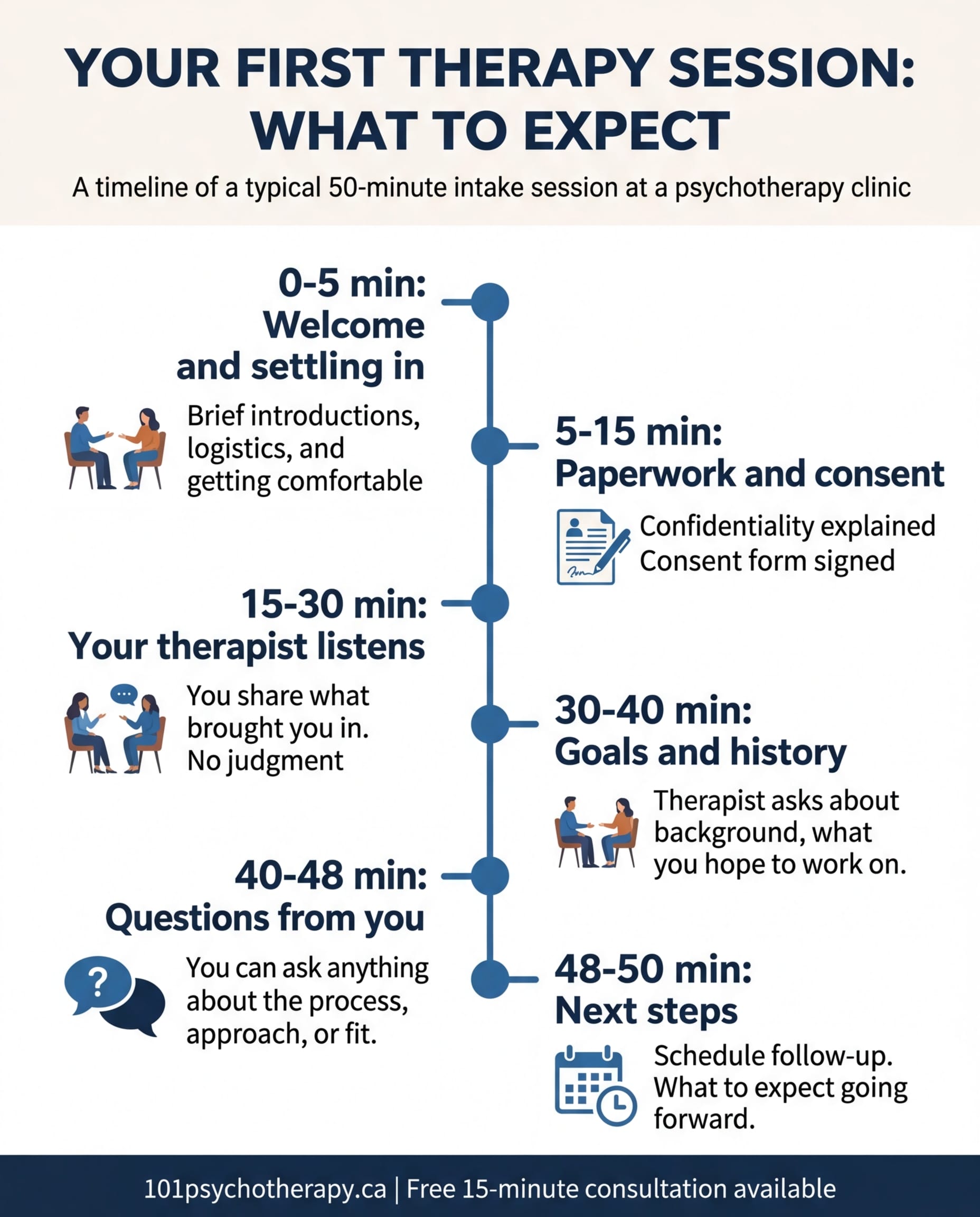
The first 10 minutes: logistics and consent
Sessions typically start with a few logistical items: payment confirmation, consent forms, and an explanation of confidentiality. The confidentiality explanation is important and worth listening to carefully. Everything you share in therapy is confidential, with three narrow exceptions:
- If the therapist believes you are at imminent risk of harming yourself or others
- If there is active child abuse or neglect
- If a court order requires disclosure
Outside these situations, nothing leaves the room. Your therapist will not contact your employer, family, or doctor without your written consent.
Did you know?
Feeling nervous before a first therapy session is so common it has a name in clinical literature: anticipatory anxiety. Most clients report feeling significantly more at ease within the first 15 minutes of their initial appointment.
What your therapist is actually listening for
Once the paperwork is done, most therapists open with something simple: What brings you in today? or What made you decide to reach out now? This is not a trick question. Answer in whatever words feel natural. Your therapist is not evaluating you. They are trying to understand:
- What is currently causing you distress or discomfort?
- How is it affecting your daily life, relationships, or work?
- What would feel different if things improved?
You do not have to cover everything in the first session. This is the beginning of an ongoing conversation, not a one-time assessment.

They will ask some background questions
Toward the middle of the session, most therapists will ask about your history. Not your entire life story, but relevant context: how long you have been dealing with this, whether you have had therapy before, whether you are currently on any medication, and what your support system looks like. This helps them understand your situation in context and begin thinking about which approaches might help. Some therapists follow a more structured intake format; others keep it conversational. Either is normal.
You get to ask questions too
Many people do not realize that the first session is also an opportunity to interview the therapist. You can ask:
- What therapy approach do you use for what I am describing?
- How many sessions do people typically work with you?
- What does a typical session look like once we are past the intake phase?
- What is your cancellation policy?
These are fair questions. A good therapist will answer them clearly and without defensiveness.
It is okay if it feels a bit awkward
First sessions often feel a little stilted. You are talking to someone you have just met about things that are usually private. A little discomfort is not a red flag. It usually eases by session two or three as the relationship develops. What you want to pay attention to is whether the therapist makes you feel heard and safe, not whether you left the first session feeling like everything was resolved. The first session is a starting point.
Our Registered Psychotherapists in Vaughan, Richmond Hill, Aurora, and Brampton offer a free 15-minute introductory call before you commit to a paid session. Book yours here.
Frequently asked questions
What should I say in my first therapy session?
There is no script. Most therapists will start by asking something like: What brings you in today? or What made you decide to reach out now? Answer honestly in whatever words feel natural. You do not need to have everything figured out before you walk in.
How long is a first therapy session?
Most first sessions run 50 to 60 minutes. Some therapists do a slightly longer intake session of 75 to 90 minutes to gather more background. Ask when you book so you know how much time to set aside.
Will I have to talk about my childhood in the first session?
Not necessarily, and not all therapy involves exploring childhood at all. A CBT-focused therapist, for example, is more likely to focus on your current thought patterns and behaviours. Your therapist will be guided by what you want to work on. You can always ask upfront: what does your approach focus on?
What if I cry during my first session?
Therapists are completely accustomed to this. Crying is a natural response when you start talking about things that matter. You will not be judged for it, and you will not derail the session. There are tissues in every therapy office for a reason.
How will I know if the therapist is a good fit?
Pay attention to how safe and heard you feel during the session. Did they listen without interrupting or jumping to conclusions? Did their questions feel relevant to your experience? You do not have to decide after one session, but if by session 2 or 3 something feels consistently off, it is worth either raising it directly or trying someone else.
Download the free guide
Save this as a free PDF guide.
