

The Test of Variables of Attention, or T.O.V.A., is a computerized test that measures two things: how steadily you can hold attention, and how well you can hold back an impulse. At 101 Psychotherapy in Vaughan, it is administered and interpreted by Tatiana Dvorkina, a clinician with an MD and a PhD who specializes in TOVA-based attention assessment. You can book the T.O.V.A. as a standalone service, or take it as one step inside ADHD care. Either way, you leave with a report and a clinician who has explained it to you.
What Is the T.O.V.A. Test?
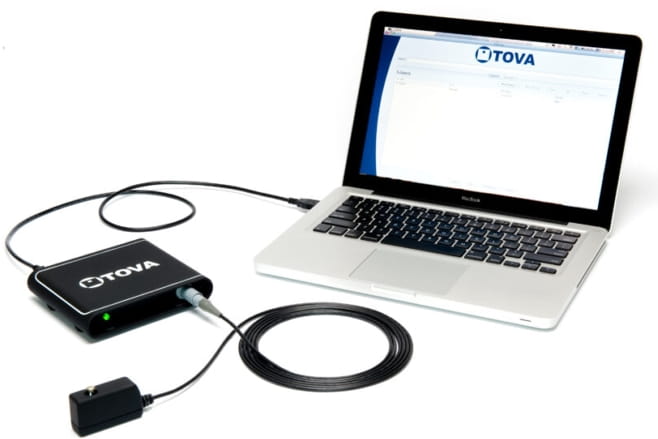
The T.O.V.A. is a continuous performance test, often shortened to CPT. You watch a screen, or listen to two tones, and press a handheld microswitch when the target appears. The switch records your response to within a millisecond. The current edition is the T.O.V.A. 9.
It carries no words, no reading and no left-right decisions, so it does not reward literacy or education. What it records is timing: how fast you respond, how consistent that speed stays, when you press without a target, and when a target passes you by. Your responses are compared against two reference groups: a large sample matched to your age and sex, and a sample of people diagnosed with ADHD.
What the T.O.V.A. Measures
Four variables come out of the test. Each one describes a different part of attention, and none of them is a diagnosis.
Response Time Variability
How consistent your correct responses are. Attention rarely fails all at once. It drifts, returns, drifts again. Variability is the measure that catches the drift between one stimulus and the next.
Response Time
The average speed of your correct responses, which reflects how quickly information is processed. Too fast to inhibit, too slow to keep pace, or an unsteady mix of both: each pattern carries different consequences in daily life.
Commissions (Impulse Control)
A commission is recorded when you press for something that was not a target. Commissions describe inhibitory control, the capacity to not act on the first urge.
Omissions (Sustained Attention)
An omission is recorded when a target appears and you do not press. Omissions describe focus and vigilance over time.
101 Psychotherapy – Always caring, always here
What to Expect During the Test at 101 Psychotherapy
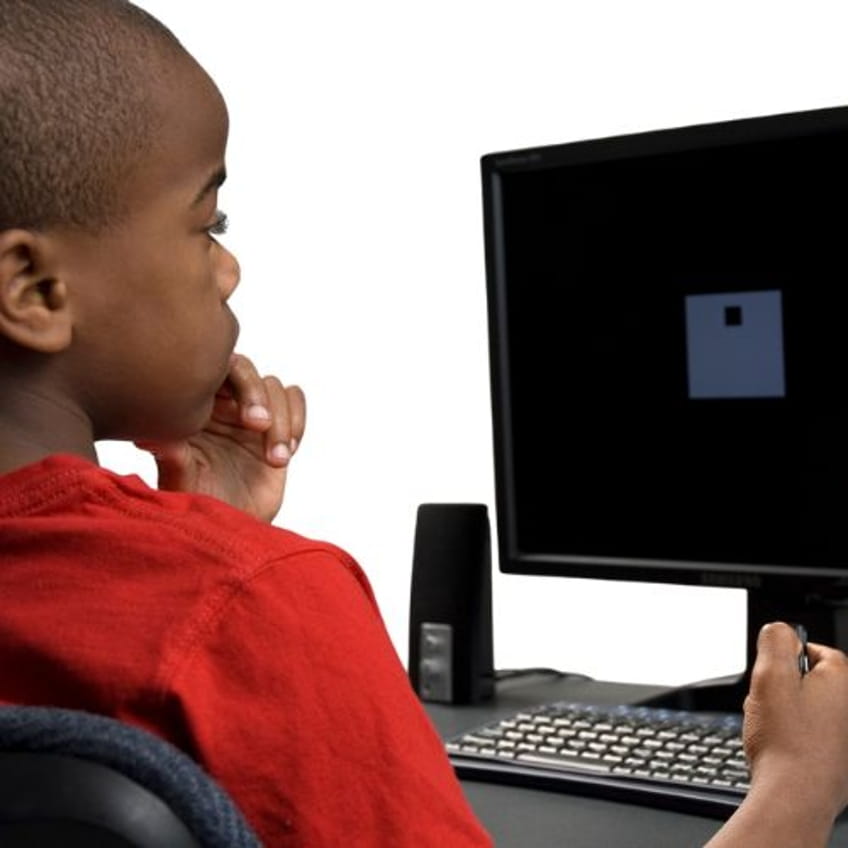
People who have taken the TOVA test describe it as the one with the clicker and the white square, and that is fair. On the visual test, two simple images alternate on the screen. You press the switch when the correct one appears and stay still when it does not. On the auditory test, two tones alternate and you press for the higher one. A full test takes 21.6 minutes, run as two halves with no break between them. Children aged 4 to 5.5 take a shorter version of about 11 minutes.
It is repetitive. It is uneventful. That is deliberate. The test is built to be dull, because the interesting question is what your attention does once nothing is holding it. Boredom is the instrument, not a flaw in it.
Knowing that in advance helps. People who expect a challenge often find it insulting and stop partway through, which records an abandoned test rather than their attention. Sit with the dullness. That is the measurement.
What the T.O.V.A. Can and Cannot Tell You
The company that makes the test is unambiguous about its limits: no test can diagnose ADHD, only a clinician can, and results should be interpreted only by qualified professionals. Independent research agrees. A systematic review and meta-analysis of continuous performance tests, the T.O.V.A. among them, concluded that they belong inside a broader diagnostic process rather than in place of one. The review is summarized by CADDRA, the Canadian ADHD Resource Alliance.
In Ontario a diagnosis is communicated by a physician, a nurse practitioner or a psychologist. Where that is the next step, we say so and help you get there. At 101 Psychotherapy, a T.O.V.A. score is never the sole basis for any conclusion about you.
Who the T.O.V.A. Test Is For
The visual test is used from age 4 upward and is normed well into adulthood. Children aged 4 to 5.5 take a shorter version. The auditory test is normed for ages 6 to 29.
It tends to be useful for:
- Adults who have suspected for years that attention is the problem, and who want something measured rather than remembered
- Children and teenagers whose difficulty with attention shows up differently at home than at school
- Anyone already in ADHD care who wants a baseline before starting neurofeedback, and a second measurement afterward
- Anyone whose clinician has asked for an objective measure of attention to place alongside the rest of an assessment
How to Prepare for Your T.O.V.A. Test at 101 Psychotherapy
- No caffeine on the day of the test. Not coffee, tea, cocoa or soft drinks. Caffeine changes reaction time, which is one of the four things being measured.
- No smoking within three to four hours of your appointment, for the same reason.
- Sleep normally the night before. Tiredness pulls the numbers in the same direction inattention does.
- Eat something light beforehand. Arriving hungry adds noise you do not want.
- Tell us about every medication you have taken in the last 24 hours, with the dose and the timing. This is recorded with your session. Do not stop or change any medication before the test without speaking to the clinician who prescribed it.
- Arrive a few minutes early, and expect to take off your watch and silence your phone. The room is quiet and softly lit, with no visible clock. Nothing in it is meant to hold your attention, including the passage of time.
What Your Report Shows
The report is generated as soon as the test ends. It contains 29 independently calculated scores, set against the age- and sex-matched sample and against the ADHD comparison sample, with the four variables charted across the two halves of the test. What it does not contain is a line that says yes or no. The scores describe patterns, and patterns need context, so a clinician goes through the report with you and explains what your results do and do not suggest.
How the T.O.V.A. Fits Into ADHD Care
The T.O.V.A. is a separate service. You can book it without becoming a therapy client here, and many people do, often at the request of another clinician.
It is also a step inside ADHD care. Before neurofeedback begins, the T.O.V.A. establishes a clear starting point, and repeating it afterward shows whether anything has shifted. Where the goal is treatment rather than measurement, ADHD and ADD therapy is the work itself: structure, skill building, emotional regulation, and the practical business of finishing what you started.

Meet Your T.O.V.A. Specialist
The T.O.V.A. at 101 Psychotherapy is administered by Tatiana Dvorkina.
Tatiana is an experienced psychotherapist and a former psychiatrist. She completed an MD and a PhD, contributed to the psychiatric field through both clinical practice and academic research, and has authored multiple peer-reviewed publications. Alongside her decades of experience in psychiatry, she specializes in neurofeedback and biofeedback, together referred to as neurobiofeedback, and in T.O.V.A.-based attention assessment. Her practice today centres on Transactional Analysis.
View Tatiana's profileVisit Our Clinic
You will find us at 1520 Steeles Avenue West #101A, Vaughan, ON L4K 3B9, in Concord, a short drive from Highways 400 and 407. The T.O.V.A. runs on calibrated equipment, so the test itself always takes place in person at the Vaughan clinic.
Clients travel to us from Concord, Woodbridge, Maple and Thornhill, as well as those travelling from nearby communities such as Aurora, Brampton, Markham, Mississauga, Milton, Oakville, Oshawa and Richmond Hill. We also welcome clients from across Toronto, including North York, Midtown and Uptown Toronto.
Visit us: 1520 Steeles Ave W #101A, Vaughan, ON L4K 3B9 (Steeles & Dufferin, Concord). Phone: (905) 597-2521
Frequently Asked Questions
Can the T.O.V.A. Test Diagnose ADHD?
No. The T.O.V.A. produces objective data on attention and impulse control. A diagnosis also weighs your history, how long the difficulties have persisted, where they appear, and what else might explain them, and in Ontario it is communicated by a physician, a nurse practitioner or a psychologist.
How Long Does a T.O.V.A. Test Take?
A full test takes 21.6 minutes, whether visual or auditory; children aged 4 to 5.5 take a shorter version of about 11 minutes. Your appointment runs longer, because it includes setup and the conversation about what the report shows. If you take both the visual and the auditory test, they are spaced apart and the visit is longer again.
Is There an Alternative to the T.O.V.A. Test?
Yes. Other continuous performance tests include the Conners CPT, the IVA-2, MOXO and the QbTest, and rating scales such as the Vanderbilt are often used alongside them. Each measures a slightly different slice of attention, and none of them is a diagnosis either.
I Am Good at Video Games. Will That Affect My Results?
It might, and pretending otherwise would be dishonest. Someone with ADHD who plays a lot of games may find a fast, screen-based task engaging rather than tedious, hold attention through it, and score unremarkably. That is a false negative, and one of the clearest reasons a single result is never enough on its own. Tell us beforehand if games are a big part of your life. It changes how the result is weighed.
What Is a Normal T.O.V.A. Score?
There is no pass mark. Your results are compared with people of the same age and sex, and separately with people diagnosed with ADHD, and the report describes patterns across the four variables and the two halves of the test.
Can I Take the T.O.V.A. Without Being a Therapy Client Here?
Yes. It is a standalone service, and you do not need to be in therapy at 101 Psychotherapy to book it.
Book Your T.O.V.A. Test in Vaughan
If you already know you need the T.O.V.A., book it and we will take it from there. If you are not sure whether it is the right measurement for what you are dealing with, tell us what is going on. We will say honestly what the test can and cannot show, and help you decide what makes sense next.