
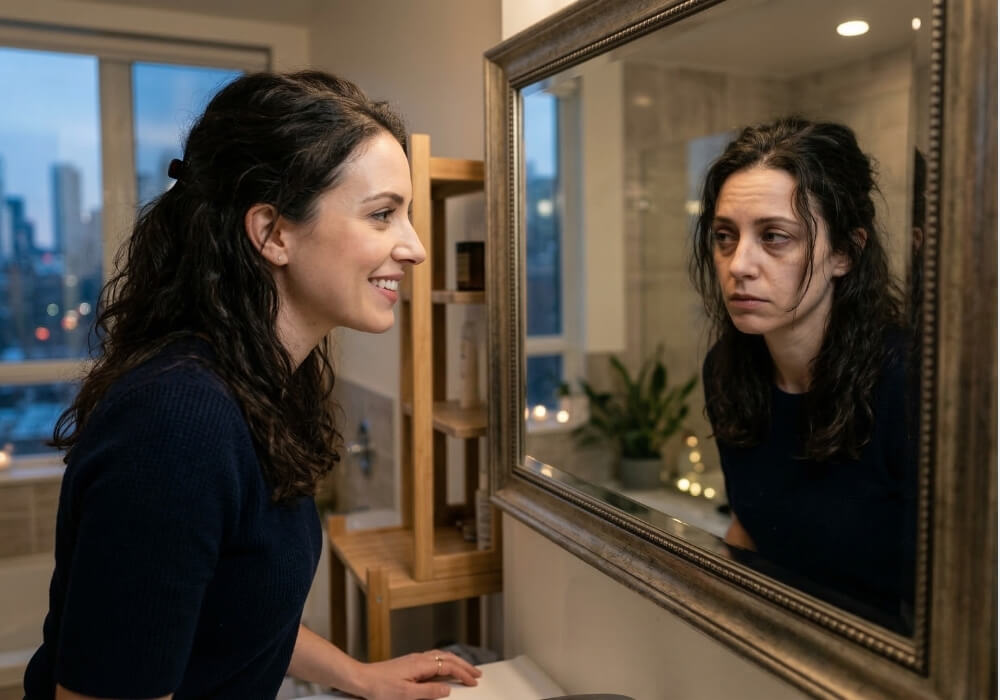
ADHD in men vs women differs less in its underlying biology than in how it shows up in daily life. Men and boys more often display visible, externalized signs such as hyperactivity and impulsivity, while women and girls more often experience internalized symptoms like inattention, mental restlessness, and emotional overwhelm. Those quieter signs are easier to miss, which is one of the main reasons women are frequently recognized and diagnosed later in life.
In this article
- How ADHD Presents Differently in Men and Women
- ADHD Symptoms in Men
- ADHD Symptoms in Women
- How Hormones Influence ADHD Symptoms in Women
- Why ADHD Is Often Diagnosed Later in Women
- How Does ADHD Impact Relationships for Men and Women?
- Treatment Options for Adults with ADHD
- Getting Support for Men and Women with ADHD
- References
How ADHD Presents Differently in Men and Women
The gender differences in ADHD are rooted in how symptoms are expressed rather than in different causes. Attention-deficit/hyperactivity disorder is a neurodevelopmental condition, and the American Psychiatric Association’s DSM-5-TR describes three main presentations: predominantly inattentive, predominantly hyperactive-impulsive, and combined. Anyone of any gender can have any of these presentations. In practice, though, boys and men are more likely to show the hyperactive-impulsive pattern, while girls and women are more likely to show the inattentive one.
Part of the reason these patterns matter is historical. Early descriptions of ADHD were based largely on hyperactive young boys, and the diagnostic criteria that followed reflected that profile. An international expert consensus statement on females with ADHD concluded that the wide gap between male and female diagnosis rates is explained, at least in part, by a lack of recognition and referral bias, rather than by ADHD being genuinely rare in girls and women. When a condition is defined around one group, the people who present differently are the ones most often overlooked.
ADHD is also a lifelong condition rather than something children simply grow out of. Many adults who are assessed today were never identified in childhood, often because their symptoms were quieter, they found ways to compensate, or the adults around them did not connect the dots. Recognizing that the condition can look different at different ages, and different across genders, is central to forming an accurate picture and getting the right help.
ADHD Symptoms in Men
The most widely recognized ADHD symptoms in men align with the hyperactive-impulsive presentation, which is also the version most people picture when they think of the condition. Many men describe a near-constant sense of internal restlessness, a need to keep moving or stay busy, and real difficulty sitting still through long or low-stimulation tasks.
Common signs include impulsive or risk-taking behaviour, such as fast driving or unplanned spending, a short fuse that can lead to sudden frustration, and a tendency to hyperfocus on engaging activities while routine responsibilities slip. In adulthood, the obvious physical hyperactivity of childhood often settles into a quieter inner restlessness, while struggles with organization, time management, and follow-through become more apparent at work and at home. Because these behaviours are outwardly visible and can disrupt a classroom or workplace, boys and men are more likely to be noticed and assessed earlier. It is worth remembering that plenty of men have the inattentive presentation too, so a quiet, easily distracted man can be missed just as easily as a woman.
ADHD Symptoms in Women
The ADHD symptoms in women are often quieter and more internalized, which is exactly why they are so frequently misread. Instead of obvious hyperactivity, many women experience racing thoughts, chronic disorganization, forgetfulness, and a persistent sense of being overwhelmed by ordinary tasks. Because these signs are not disruptive to other people, they are easily mistaken for a personality trait, a character flaw, or simple stress rather than recognized as a treatable condition.

A few patterns are especially common. The inattentive presentation can look like daydreaming, losing the thread of conversations, and struggling to start or finish tasks, an experience many people describe as brain fog. Many women also learn to mask their symptoms, working much harder than those around them to appear organized while feeling depleted underneath, a coping style that can hold up under pressure for a long time but tends to come at the cost of exhaustion and self-doubt. Emotional sensitivity is common as well: some clinicians use the term rejection sensitive dysphoria to describe intense emotional pain in response to perceived criticism or rejection, though it is not a separate diagnosis in the current diagnostic manual.
| Common signs in women | How it can show up in daily life |
|---|---|
| Internalized restlessness | Racing thoughts, trouble winding down, or difficulty sleeping. |
| Masking | Exhaustion from working extra hard to appear organized and “fine.” |
| Emotional sensitivity | Feeling deeply hurt by perceived criticism or rejection. |
| Chronic overwhelm | Everyday tasks, like paperwork or housework, can feel insurmountable. |
How Hormones Influence ADHD Symptoms in Women
Hormones add a layer to ADHD in women that men do not experience in the same way. The brain is sensitive to estrogen, and an expert consensus statement on females with ADHD notes that symptoms may be exacerbated by hormonal changes during the menstrual cycle, pregnancy, and menopause.
These shifts can surface at several points across the lifespan. The same consensus statement observes that as hormonal changes occur during puberty, the period after childbirth, and menopause, women may notice their symptoms change and may benefit from revisiting their treatment plan. In everyday terms, focus, memory, and mood can feel harder to manage when estrogen is lower, such as in the days before a period or during the transition toward menopause. Because symptoms can appear to intensify at these stages, a number of women first recognize their ADHD and seek an assessment in midlife rather than earlier in life.
Why ADHD Is Often Diagnosed Later in Women
Undiagnosed ADHD in women is common, and the gap between male and female diagnosis is striking. The Centre for Addiction and Mental Health (CAMH) reports that ADHD is three to four times more common in boys than in girls, and the Centre for ADHD Awareness, Canada (CADDAC) notes that girls are identified, on average, about five years later than boys.
Several factors push diagnosis later for women. Because their symptoms are subtler, they are often attributed to personality or stress, and many women are first treated for anxiety or depression before ADHD is even considered. In fact, CADDAC notes that research suggests up to 75 percent of girls with attention problems go undiagnosed, so many reach adulthood without an explanation for their struggles. Recognition also tends to surface during demanding life transitions, such as starting a new job, having children, or losing the structure that once helped someone cope, and some women pursue assessment only after their own child is identified with ADHD.
Co-occurring conditions add to the confusion. The expert consensus statement on females with ADHD highlights that women’s profile of coexisting difficulties can differ from men’s, and conditions like anxiety and depression are common companions that often draw clinical attention first. CADDAC also notes that girls and women with ADHD face a higher risk of disordered eating, reporting that females affected by ADHD are roughly three and a half times more likely to develop an eating disorder. When these conditions are treated in isolation, the ADHD underneath can stay hidden for years, which is part of why an assessment that considers the whole picture matters so much.
Living with unrecognized ADHD takes a real toll. Years of feeling as though you are working harder than everyone else for the same result can wear down self-esteem and contribute to chronic stress and burnout. Many people describe a long-running sense of underachievement or of letting others down, even when their effort has been considerable. Understanding that these struggles have a neurological explanation, rather than reflecting a personal failing, is often the first step toward effective support.
How Does ADHD Impact Relationships for Men and Women?
ADHD and relationships are closely linked, because the condition touches the communication, attention, and emotional regulation that partners rely on every day. The friction tends to look different depending on how symptoms present.
For some men, impulsivity can mean blurting out something hurtful in the middle of an argument, or a partner feeling unheard when attention drifts during a long conversation. For many women, the mental load of running a household becomes the pressure point: a forgotten appointment or a misplaced family schedule can spark guilt and conflict, especially when they are already masking how much effort daily life quietly takes. In either case, naming ADHD as a shared challenge, sometimes with the help of couples therapy, can move a relationship from blame toward teamwork.
Treatment Options for Adults with ADHD
Effective treatment for ADHD in adults usually combines more than one approach, and CAMH describes care for adult ADHD as drawing on both psychological support and medication. According to CAMH, psychoeducation, which means learning how ADHD works and how it affects daily life, is often the first step, because understanding the condition helps people stay engaged with a plan and make supportive lifestyle changes. What works best is highly individual, and a strong plan is built together with a qualified clinician.

Common components include:
- Cognitive behavioural therapy (CBT), which helps identify unhelpful thought patterns, such as a habit of self-blame, and build practical strategies for planning and follow-through.
- Skills coaching for executive function, focused on time management, organization, and dependable routines that lower the friction of daily life.
- Mindfulness practices, which can support attention and emotional regulation.
- Medication, when appropriate, prescribed and monitored by a physician.
Everyday habits matter too. Consistent sleep, regular physical activity, and external supports like reminders, calendars, and checklists can ease the load on an ADHD brain and help other treatments work better. For women whose symptoms shift with hormonal changes, it can also help to track those patterns and discuss them with a clinician, so that support is adjusted to the times of the month or life stage when symptoms feel hardest. ADHD is a manageable condition, and many adults find that once they understand how their attention actually works, they can shape routines and environments that play to their strengths instead of fighting against them.
Getting Support for Men and Women with ADHD
If the patterns described here feel familiar, professional ADHD support can help you make sense of them. You do not need a formal diagnosis to benefit from therapy. Signs worth exploring include chronic disorganization, difficulty finishing tasks, heightened emotional sensitivity, and a long history of feeling that everyday demands take more out of you than they seem to for others. These are reasons to consider an assessment, not a diagnosis on their own, and only a qualified professional can confirm ADHD.
At 101 Psychotherapy, our team includes Registered Psychotherapists in Ontario who work with adults navigating attention, overwhelm, and the emotional weight that often follows a late diagnosis. Therapy can help you build practical tools, ease the self-criticism that frequently accompanies undiagnosed ADHD, and decide whether a formal assessment is a useful next step. When you feel ready, you can book an appointment to talk through your experiences and decide on next steps together.
References
- Centre for Addiction and Mental Health (CAMH). Attention Deficit Hyperactivity Disorder (ADHD). https://www.camh.ca/en/health-info/mental-illness-and-addiction-index/attention-deficit-hyperactivity-disorder
- Centre for Addiction and Mental Health (CAMH). Adult ADHD: Treatment. https://www.camh.ca/en/professionals/treating-conditions-and-disorders/adult-adhd/adult-adhd—treatment
- Centre for ADHD Awareness, Canada (CADDAC). ADHD in Women and Girls. https://caddac.ca/adhd-in-women-and-girls/
- Young S, Adamo N, Asgeirsdottir BB, et al. (2020). Females with ADHD: An expert consensus statement taking a lifespan approach providing guidance for the identification and treatment of attention-deficit/hyperactivity disorder in girls and women. BMC Psychiatry, 20, 404. https://pmc.ncbi.nlm.nih.gov/articles/PMC7422602/
- American Psychiatric Association. Diagnostic and Statistical Manual of Mental Disorders, Fifth Edition, Text Revision (DSM-5-TR). 2022. https://www.psychiatry.org/psychiatrists/practice/dsm (Reference for the three ADHD presentations.)

Written by